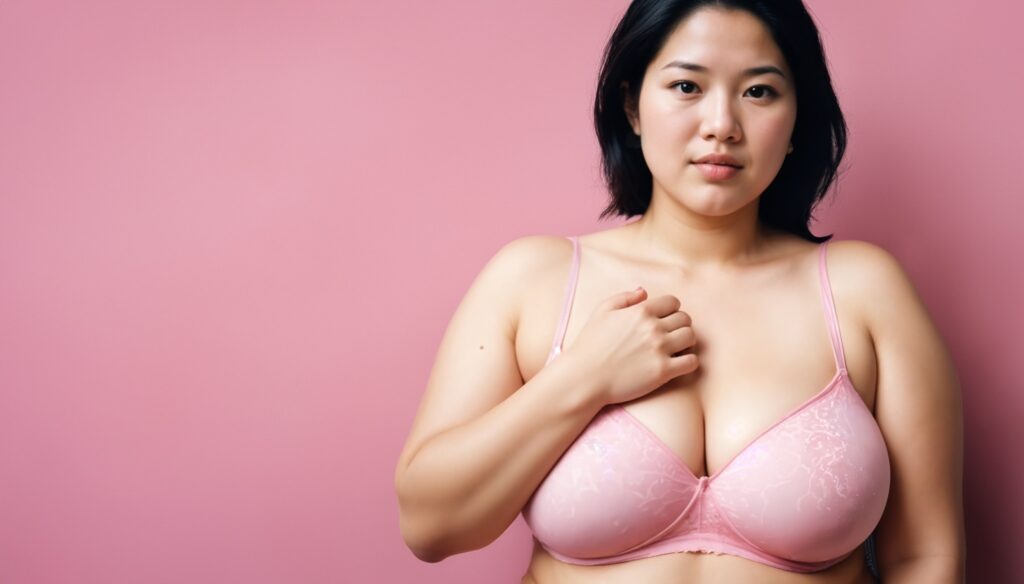
Large breasts are sometimes viewed mainly as a cosmetic concern. But for some women, breast size can affect comfort, movement and everyday activities. The question is not simply whether the breasts are “too large”, but whether their size is contributing to symptoms that affect quality of life.
Key takeaways
- Large breasts can contribute to neck, shoulder and upper back discomfort, particularly when symptoms are persistent.
- Skin irritation, difficulty exercising and problems with clothing can also be relevant.
- Breast size alone does not determine whether treatment is appropriate; symptoms, examination findings and individual circumstances matter.
- Breast reduction is one possible option for selected patients, but it is not automatically necessary for everyone with large breasts.
- A medical assessment can help determine whether breast size is actually contributing to the problems you are experiencing.
When does breast size start affecting your health?
There is no single breast size at which large breasts become a medical problem. Two women with similar breast sizes may experience very different symptoms.
Breast weight may contribute to strain around the neck, shoulders and upper back. Some women may also develop grooves or discomfort around the shoulders from bra straps. Others may find physical activity uncomfortable or difficult.
Persistent skin problems beneath the breasts can be another consideration, particularly in warm and humid conditions such as Singapore. Moisture and friction can contribute to irritation or recurrent skin inflammation.
These symptoms do not necessarily mean that breast size is the only cause. Neck or back conditions, posture, weight changes and other factors can produce similar symptoms, which is why an assessment is useful before deciding on treatment.
Is it still “just cosmetic” if everyday activities are affected?
A useful way to think about this is whether breast size is interfering with things you would otherwise be able to do comfortably. For example, you may notice that you,
- Avoid certain forms of exercise because of discomfort.
- Regularly experience neck, shoulder or upper back symptoms.
- Have difficulty finding supportive clothing that fits comfortably.
- Develop recurring irritation beneath the breasts.
- Feel that breast weight affects your posture or physical comfort.
None of these symptoms automatically means that surgery is required. They are reasons to discuss the problem with a doctor and consider whether there is a connection between breast size and your symptoms.
Where does breast reduction fit in?
For appropriately selected patients, breast reduction for large breasts may be considered when symptoms are persistent and breast size is thought to be contributing to them.
The procedure involves removing breast tissue and reshaping the remaining breast tissue. However, whether it is suitable depends on factors such as your symptoms, breast anatomy, general health, previous breast surgery and your expectations.
A consultation should therefore involve more than discussing breast size. The doctor may need to understand how your symptoms affect your daily activities and assess whether other causes could be contributing.
What should you consider before making a decision?
Breast reduction is still surgery, so it has potential risks and recovery requirements. Scarring, changes in nipple or breast sensation, bleeding, infection, wound-healing problems and changes in breastfeeding ability are among the issues that may need to be discussed.
The decision should be based on your individual circumstances rather than a particular cup size or an expectation of a specific result.
Frequently Asked Questions
Can large breasts cause back pain?
They may contribute to neck, shoulder or upper back discomfort in some women. However, back pain has many possible causes, so it should not automatically be attributed to breast size.
Do I need breast reduction if my breasts are large but I have no symptoms?
Not necessarily. Breast size by itself does not establish a medical need for reduction. Your preferences and individual circumstances can be discussed with a doctor.
Can breast reduction help with exercise difficulties?
It may be considered when breast size is contributing to discomfort during physical activity. An assessment can help determine whether this is likely to be relevant in your situation.
Will breast reduction affect breastfeeding?
It can. The effect varies according to the surgical technique and individual circumstances, so future breastfeeding plans should be discussed before surgery.
Schedule an assessment to understand better
If breast size is causing persistent discomfort, skin problems or practical limitations, it may be worth discussing your symptoms with a doctor rather than assuming they are simply cosmetic.
For women in Singapore considering their options, Radhika Breast and General Surgery can provide an opportunity to discuss these concerns with Dr Radhika Lakshamanan and determine whether further assessment or treatment is appropriate for their individual situation.